Rangi Point Pictures — Born of the Hokianga

Stories from the
Meeting Place
of Two Worlds

Where the land speaks and the spirit answers.

Bicultural cinema that refuses to blink — the grit of the Hokianga coast meeting the timeless questions of the human heart.

View the Slate Join the Journey

The Problem with Most Films

The Ghost
in the Machine

Most modern cinema is content — fast, polished, and empty. It lacks the mana of the land and the weight of history. It has the production values but not the soul. It entertains but leaves nothing behind.

We're building films in the tradition of Boy, Cousins, Tama Tū, and Whenua — stories that know where they come from — with the moral weight of The Mission, the quiet devastation of Rabbit-Proof Fence, and the warmth of Top End Wedding. Indigenous cinema at its most alive. Stories carried in the bones, not constructed in a room.

"The spirit that leaps into the soul — that's the difference between a film that's watched and a film that's carried."
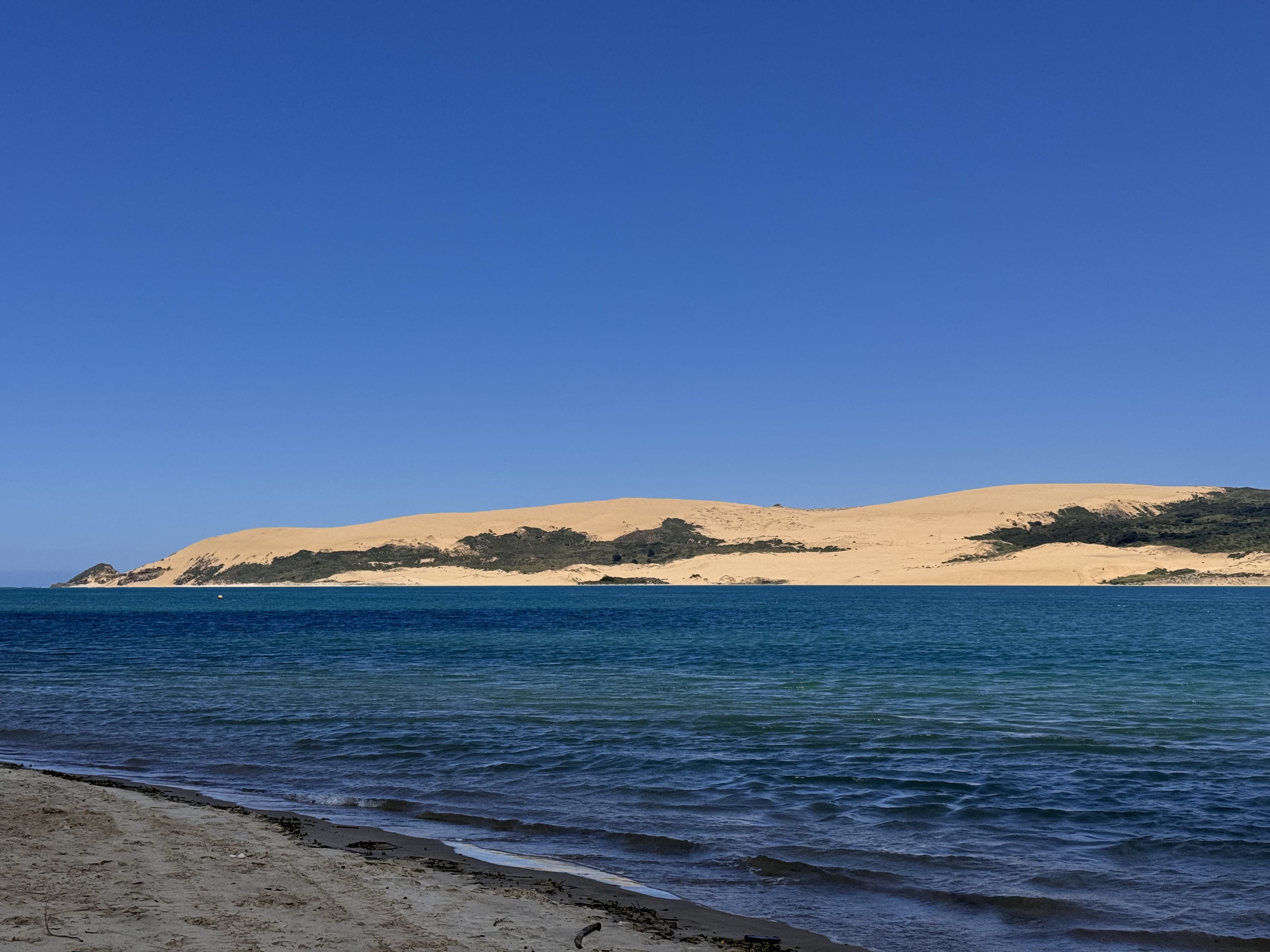
Hokianga harbour looking across to the sand dunes — the land that breathes through the films of Rangi Point Pictures

The Rangi Point Ethos

We tell stories
from the inside

Where te ao Māori and the elemental spirit of the land meet and recognise one another. Te reo Māori is not a subtitle here — it is the heartbeat.

01 —
The Right Story

Stories chosen the way Moneyball chooses players — not by glamour, but by what is true and necessary and has been overlooked.

02 —
The Right People

Cultural authority is built in, not bolted on. Kaumātua guidance, community embedding, and kaupapa Māori process are structural, not decorative.

03 —
The Right Tension

Man vs. the Unseen. The physical world we walk in, and the spiritual world that breathes through the land and our ancestors. That tension is the engine.

04 —
Story Sovereignty

Māori stories told from the inside. Intellectual property owned by the people whose lives, language, and land are the story.

Ngā Kiriata — The Slate

Six Films.
One Kaupapa.

The Mystery — Short Films
Active Development

Showdown

Short Film · Te Reo Māori · Waiōhau, Tūhoe Country

Waiōhau, 1960s. Three Māori boys cross a haunted stretch of road on a moonless night. Haka's courage is borrowed — the swagger of a cinema gunslinger he'll never be. But when the dark demands the real thing, borrowed courage fails. What he discovers in its place is older than any film he's ever seen, and it comes to him by breath and by contact, not by instruction.

Cultural Anchor — Jonas Haare-Taoho

Active Development

Hongi

Short Film · Te Reo Māori / Spanish · Hokianga

A Hokianga football coach inherits a whakataukī from his grandfather — that a real relationship can exist across oceans, held together by nothing more than a photograph and the will to believe it. The photograph is from Uruguay, 1967. The grandfather is gone. What the coach must decide is whether the old man was right — and whether he is willing to find out.

Cultural Anchor — Jonas Haare-Taoho

The High-Stakes Dramas — Features
In Development

Just Football

Feature Film · NZ–UK Co-production · ~NZ$6.6M

Aroha Alice Marupo fights her way into the men's professional game and is rebranded simply "Alice." The name is a contract. When her father's love — carried in a jar of shells from the shore of her childhood — finds her in the tunnel before the biggest game of her career, she has to decide what she is willing to answer to.

In Development

The Technical Area

Feature Film · Dunedin · Football · Drama

When a Kai Tahu coach still unsure of his own identity at the wrong end of his career takes a last posting in Dunedin, he inherits a squad nobody wanted and a city that has stopped believing. What he builds is less a football team than a reckoning — with the city, with himself, and with the question of whether a man can finally come home to something he was never sure was his.

In Development

Get Ted

Feature Film · Comedic Crime · Aotearoa

A botched extraction, a very wrong address, and New Zealand's most iconic footballer — who has absolutely no interest in being rescued. What was supposed to be a clean job becomes a cross-country fever dream in which three cousins discover that getting Ted is the least of their problems. Keeping him is the job. And Ted has opinions.

The Spiritual Epics — Features
In Development — Lead Title

Incarnation

Feature Film · Historical Epic · Rome / Aotearoa · Te Reo Māori

1869. A young Māori warrior is sent to Rome to become the first of his people ordained as a Catholic priest. What he gains is a foothold in a world that will not give ground easily. What it costs him is the question the film refuses to answer cheaply. A story of what we are willing to lose — and the price of keeping what we've won.

The Architect

Richard
Kerr-Bell

Writer · Director · Producer

Ngāpuhi · Te Rarawa
Te Aupōuri · Ngāti Kuri

Born of the Hokianga.
Based in Wellington.

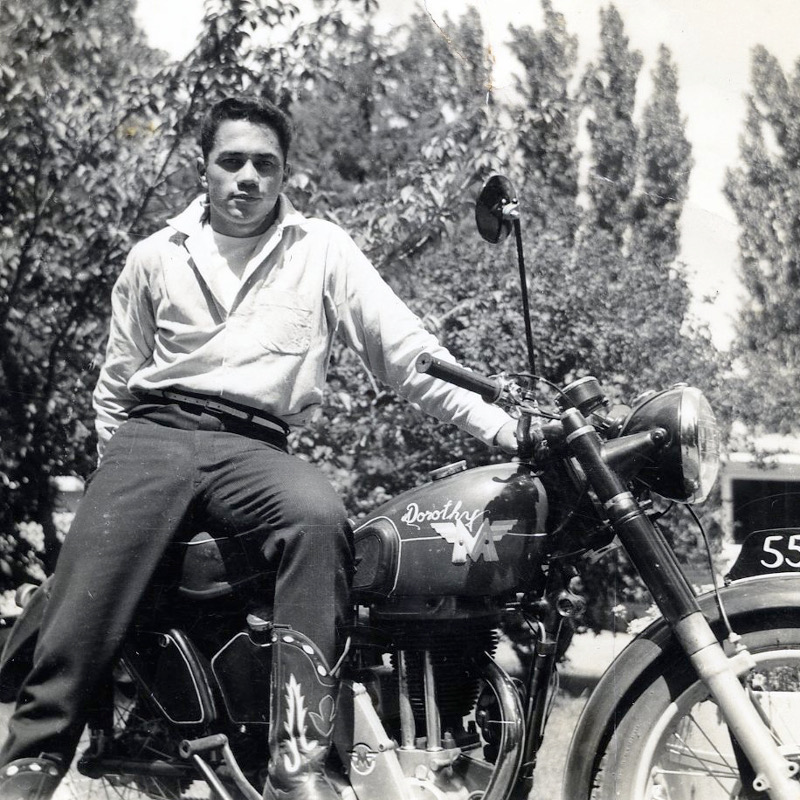
Laurie Kerr-Bell — the man behind From Rangi Point in Bare Feet

Laurie Kerr-Bell
Hokianga, c. 1955
The man the films come from.

"I believe a film should carry the stillness of Mystic of the Fencing Master and the moral fury of The Mission — but above all it must know whose land it stands on, and whose story it is telling. I'm looking for the story that has been waiting to be told, and the people brave enough to tell it with me."

Richard Kerr-Bell holds a PhD in Māori Catholic identity and ecclesiology from the University of Otago, a Master of Counselling, and over a decade of experience teaching religious education, te reo Māori, and school counselling across Aotearoa's secondary schools. He lectures on Māori spirituality at Te Kupenga Catholic Theological College and currently serves as Tumu Whakarae — National Director Māori — at The Salvation Army New Zealand.

His published work includes From Rangi Point in Bare Feet — his father Laurie's biography — and the forthcoming scholarly text Being Māori, Being Catholic — E Kore e Piri te Uku ki te Rino, currently under review at Huia Publishers. He authored the Māori elements of Tō Tātou Whakapono — Our Faith, the new national Catholic RE curriculum, using conceptual rather than literal translation — protecting the integrity of te reo and allowing the gift of God's Spirit within Māori culture to speak with full force.

His board history includes roles at New Zealand Football, Wellington Phoenix FC, Otago Hockey, Te Kupenga Catholic Theological College, and Te Hau Ora. He served for five years as Mission Director for The Sisters of Mercy New Zealand. His 25+ years of football coaching experience, including senior Māori national team roles, gives the sport-centred films in the Rangi Point slate their authentic interior life.

The themes that drive his work — inheritance and courage, the land as witness, the meeting of Māori and Catholic worlds, what legacy parents leave their children — are not researched. They are known.

Te Tikanga o te Kiriata — How We Work

Craft, Culture,
and Precision

Te Reo —

The Heartbeat, Not the Subtitle

Te reo Māori is structural in every production — not deployed for authenticity, but because these stories live in it. Dialect, whakapapa, and register are held by the communities the films are set in.

Tikanga —

Built In, Not Bolted On

Kaumātua guidance and community embedding are non-negotiable production infrastructure. Cultural authority is established before a camera is picked up, not consulted after the edit.

Mana —

Story Sovereignty

Intellectual property stays with the people whose lives, language, and land are the story. Rangi Point Pictures works in partnership — never extraction.

Whakapā Mai

We're building a
whānau of storytellers

Not afraid of the dark or the light. If you feel these stories in your bones — if you're a writer, director, producer, or crew who has been waiting for a production company that works the way this one does — let's talk.

Join the Journey Enquire About the Slate

[email protected]